Raksha Bandhan: Who Really Needs Protection Today?
A ten-year-old sister ties a thread around the wrist of her one-year-old brother, who is lying in his cradle, and says, “Brother, protect me.” The little child
 News Desk
— Acharya Prashant
A ten-year-old sister ties a thread around the wrist of her one-year-old brother, who is lying in his cradle, and says, “Brother, protect me.” The little child, meanwhile, is crying. As a ritual, the scene may still appear adorable today. But amidst the bustle of gifts and sweets, it quietly raises a question that we often fail to hear over the noise of the marketplace: Who actually needs protection, and from whom? Especially today, when many women earn for themselves, and in many families, fathers and brothers are themselves dependent upon them.
The history of Raksha Bandhan is well known, and it tells us that this festival was never merely a celebration between brothers and sisters. In the Bhavishya Purana, during the war between the gods and demons, Indrani prepares a protective thread, which Guru Brihaspati ties around Indra’s wrist—two men, one a teacher and the other a disciple. The mantra with which the thread is tied speaks of being bound by the bond of Dharma, just as King Bali was bound by Dharma, and calls upon the person to remain unwavering in his resolve. In the same story, Goddess Lakshmi, disguised as a Brahmin woman, ties the thread around Bali’s wrist. On the full moon of Shravan, Brahmins would tie the protective thread around the wrists of their patrons, reminding them to remain steadfast in Dharma with selflessness.
But rather than getting entangled in the details of these stories and Puranic accounts, it is better to go directly to the psychology at the root of this festival.
Protection is needed only by the one who is vulnerable. No one would say that a wealthy person or the army of a country needs protection. So, if a day of protection was needed for sisters and women, it indicates that a large section of society was historically never allowed to become so empowered that they would not need to ask for protection. In India, women have been called Shakti—power itself. To deprive that very power of its strength cannot be Dharma.
And real protection is that after receiving it, the protected person no longer needs to seek protection from anyone. True protection is empowerment.
So, who is truly vulnerable today? Not women, nor the girls of the coming generations, who are as capable as boys. The vulnerable one is the sparrow, which has almost disappeared from our cities. The sparrow is a poignant symbol of exploited nature and of feminine power that has been weakened. It is said that as cities became more developed, sparrows increasingly disappeared from them. In metropolitan cities such as Delhi and Mumbai, barely about twenty percent of their population remains, because nesting spaces, insects for food, and greenery have all been disappearing.
Today, the sparrow is the sister, and every human being, beyond being physically male or female, must become her brother. Species are becoming extinct at a rate ten to a hundred times faster than the normal rate, and this destruction is entirely human-made. Climate change too is something we have caused. Rivers, mountains and oceans need protection today.
But what is disappearing is not merely physical. Around the world, the common ideal is increasingly becoming: consume and be happy, as though the purpose of being human were simply consumption. The natural inclination toward self-examination and straightforward honesty is itself becoming endangered. The essence of Dharma has somewhere been mortgaged, replaced either by cheap emotional devotion or by the darkness of mysticism and rituals. Whereas true spirituality—self-observation—is what most urgently needs protection.
Vedanta says that taking the mind towards purity and peace is Dharma, and Dharma cannot exist without responsibility. That responsibility cannot remain limited to just a few members of one’s family.
A large part of what we have called development over the past few decades has been built by destroying the Earth. Natural resources have been depleted, and that destruction has been counted as part of the income of nations. Is selling our heritage and converting it into cash really a profit?
This festival belongs to the one who possesses strength and uses that strength to make a commitment to responsibility. With power comes responsibility, and today that responsibility is the protection of the Earth.
The Raksha Sutra remains relevant even today, but you must find the right wrist on which to tie it. Take care of your sister, certainly—but now the circle of compassion must expand to include the sparrow, the river, and those subtle human values without which we are not worthy of calling ourselves human.
Today, the Earth itself could come to each of us holding this thread and say, “Protect me, I am your mother.” So, tie the Rakhi, certainly tie it—but with complete understanding and a higher sense of purpose. And look around you to see who is sincere, yet becoming vulnerable.
Whether it is a woman or a man, a brother or a sister, protecting the one who is becoming vulnerable is the true way to honour this festival. That alone can keep Raksha Bandhan alive and relevant.
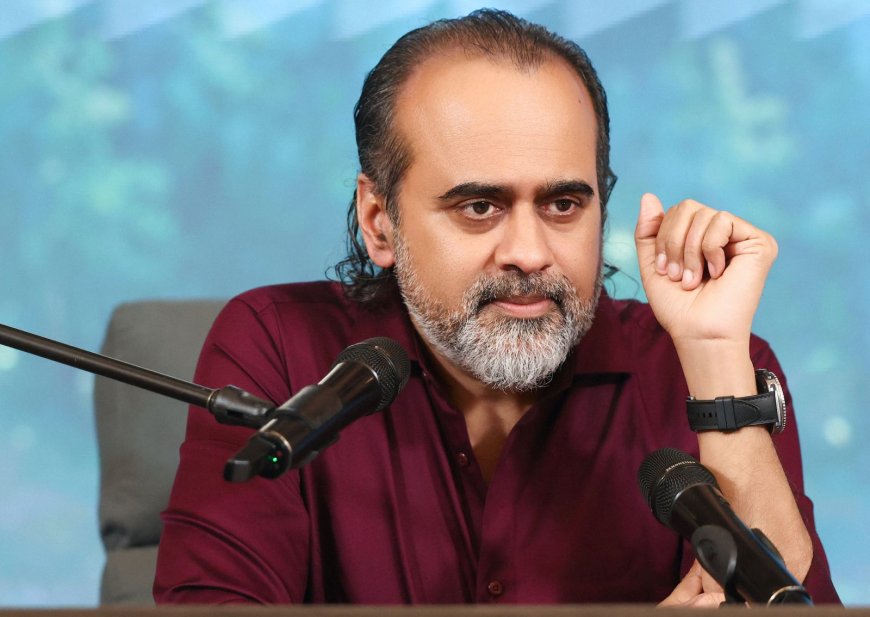
Acharya Prashant is a philosopher and author. His work focuses on self-examination and its application in contemporary life.