

“Truth is not bitter; ‘my truth’ is the biggest misconception” — Acharya Prashant
Dehradun: At the Dehradun Book Festival 2026, the interactive session of globally renowned philosopher and author Acharya Prashant emerged
 News Desk
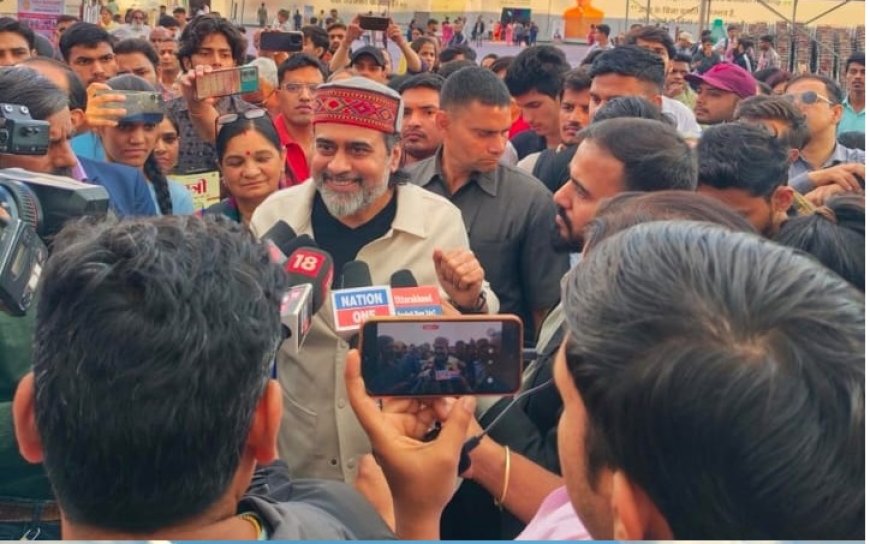

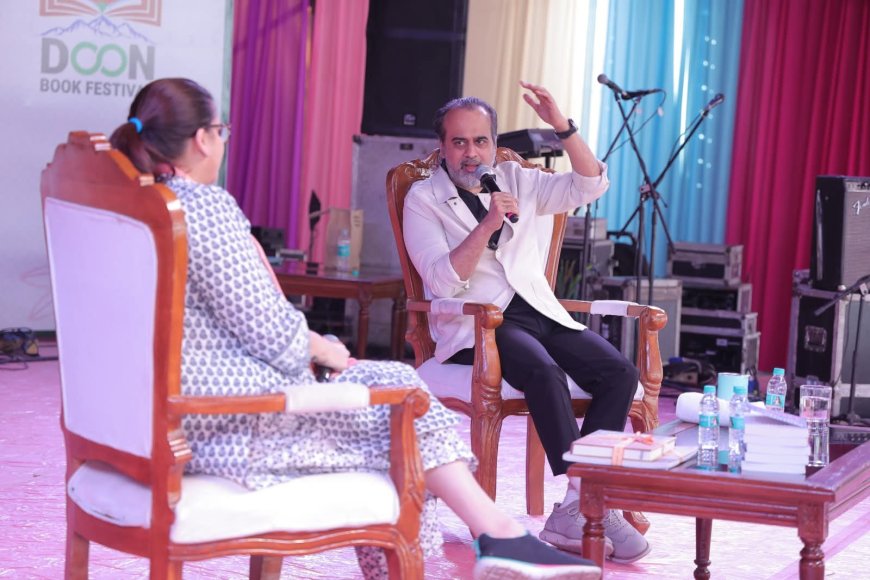
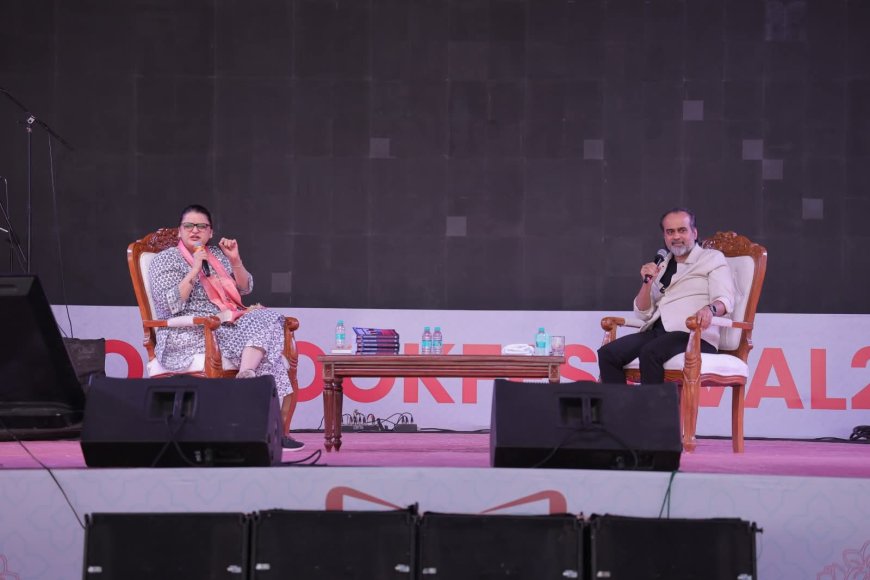
Dehradun: At the Dehradun Book Festival 2026, the interactive session of globally renowned philosopher and author Acharya Prashant emerged as the biggest attraction. Amid various literary events, his address stood out for the depth of ideas and clarity of thought. Despite the rain, a large number of people remained उपस्थित for hours, reflecting that beyond books, there is a strong desire to understand life itself.
In a dialogue session with noted author Advaita Kala, Acharya Prashant elaborated on the distinction between truth and illusion. He said,
“Truth is not bitter. For the one who truly needs it, truth is the most necessary and ultimately the sweetest.”
Challenging the popular notion of “my truth,” he remarked that such thinking is itself rooted in भ्रम.
“If something is easily grasped as truth, it cannot be the complete truth,” he stated.
He further observed that individuals today are trapped within their own mental constructs. From childhood, society and family implant various false beliefs, which people accept without questioning.
“We are repeatedly told—‘this is how things are,’ ‘the world works this way.’ These ideas limit our thinking and distance us from reality,” he said.
Acharya Prashant emphasized that fear, falsehoods, stories, and assumptions are all creations of the mind, yet people live as if they are real.
“Spirituality does not mean entering a mystical domain; it means recognizing these illusions and freeing oneself from them,” he explained.
During the session, participants raised questions on relationships, climate change, substance abuse among youth, and life challenges. Acharya Prashant responded by referring to teachings from the Bhagavad Gita, offering deeper insights into these issues.
Clear perspective on failure and identity
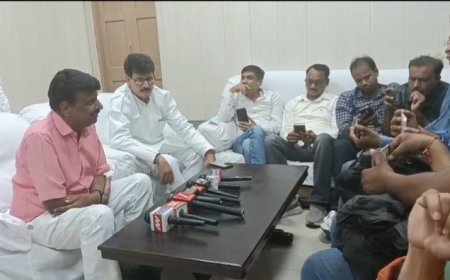
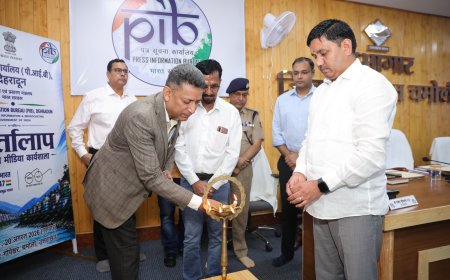
Addressing a press conference after the session, Acharya Prashant spoke extensively on contemporary issues such as politics, career, women empowerment, and the fear of failure.
He said,
“We will fail, we will fail repeatedly—but no failure should be final.”
According to him, instead of avoiding failure, one must understand it, as it reveals where one is living in illusion. Considering failure as an end is the biggest mistake; in reality, it is an opportunity for correction.
Responding to a question on identity and self-criticism, he said that in the absence of self-knowledge, a person depends on others for identity.
“Until one understands oneself, one continues to live through identities given by others,” he noted.
On education, pressure, and learning
Speaking about academic pressure and results, Acharya Prashant clarified that a person has control only over effort, intention, and honesty—not over outcomes. Referring to the principle ‘Ma Phaleshu Kadachana’ from the Bhagavad Gita, he said,
“Good parents and teachers expect honesty and love from children, not fixed results.”
He advised students not to treat studies as a burden but to develop a connection with learning.
“The mind remembers what it values. Therefore, make learning a process of understanding, not compulsion,” he said.
Spirituality and education are inseparable
Acharya Prashant stressed that considering spirituality as a separate subject is a fundamental mistake. According to him, it is an integral part of education. He described the balance of ‘Vidya’ (knowledge) and ‘Avidya’ (ignorance) as complete education—where external learning is combined with self-understanding.
He pointed out that the current education system provides information but does not teach individuals how to understand themselves.
“Until a person understands oneself, no achievement can bring true satisfaction,” he said.
Perspective on Artificial Intelligence
On the growing influence of Artificial Intelligence (AI), Acharya Prashant presented a balanced view.
“Technology itself is not the problem. It is neither good nor bad; its nature depends on the user,” he stated.
He warned that if the user is unconscious and ignorant, misuse of technology is inevitable and can pose serious threats to society and the environment. However, with awareness and responsibility, the same technology can serve humanity positively.
Duty, responsibility, and inner clarity
Acharya Prashant said that most duties arise from adopted identities, whereas true responsibility comes from understanding and love. He encouraged युवाओं to question themselves deeply:
“The first thing to understand is—who am I?”
He added that although people appear different externally, consciousness unites all, and that is the ultimate truth.
Message for the youth
In interaction with journalists, he highlighted the dual challenge faced by today’s generation.
“Earlier, people complained about oppressive systems and traditions. Today’s youth reject external falsehoods but fail to recognize the falsehood within,” he observed.
He emphasized that real transformation is possible only when individuals confront and question their inner illusions.
Dominance at the festival
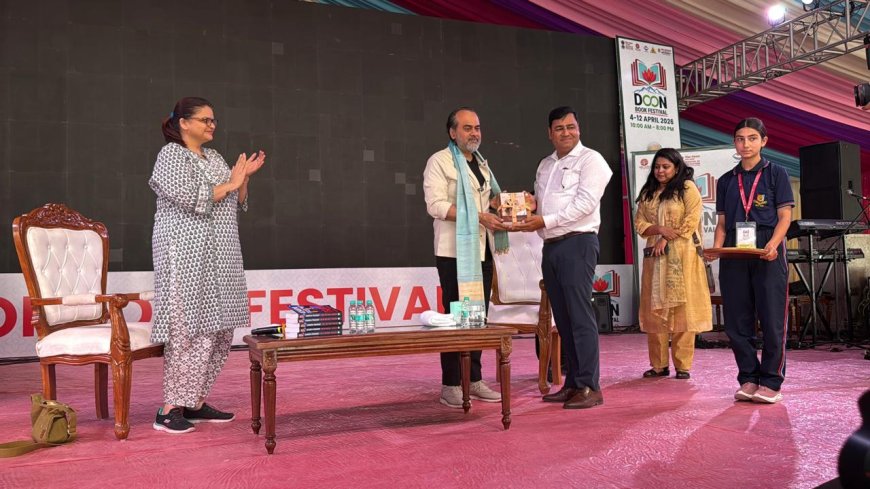
Acharya Prashant remained the central figure throughout the festival. Due to the high demand for his books, he was allocated space at three separate stalls. He personally visited these stalls and interacted with readers.
Organized by the National Book Trust, the festival hosted multiple literary activities, but Acharya Prashant’s ideas left the deepest impact on the audience. His session at the Dehradun Book Festival 2026 emerged not merely as a literary event, but as a profound dialogue centered on self-awareness and the direction of life.